
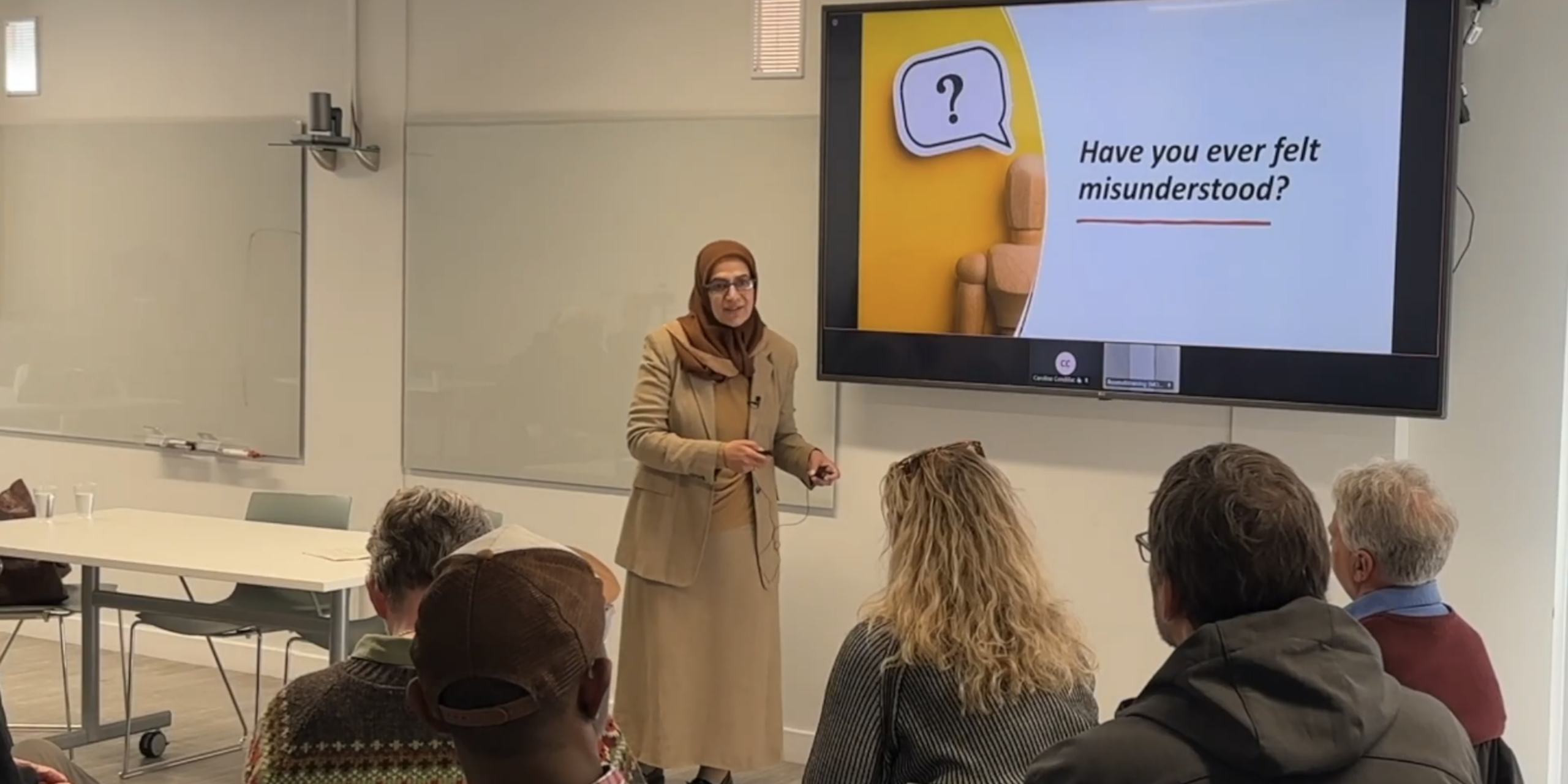
By Dr Waheeda Illahi
Based on Dr Illahi’s talk at the Keratoconus Group AGM
For many people living with keratoconus, the focus is understandably on vision: diagnosis, contact lenses, cross-linking, hospital appointments, and trying to manage day-to-day life. But at this year’s AGM, Dr Waheeda Illahi encouraged us to think more broadly about the person behind the condition.
Drawing on a two-and-a-half-year patient-centred pilot study involving 579 people with keratoconus, Dr Illahi explored an important question:
What other health conditions and life challenges are associated with keratoconus — and are there areas we should be paying more attention to?
Her talk combined clinical insight, practical advice, and a powerful reminder that understanding patients means understanding the whole person, not just the cornea.
Looking Beyond the Cornea
Dr Illahi explained that while huge advances have been made in keratoconus care over the past 30 years – including improved lens designs and materials, advances in surgical techniques, and the advent and development of collagen cross-linking – there is still more to learn about the lived experience of patients.
The study was developed after years of experience where many of the keratoconic patients seen over the years did not resemble the stereotypical personality often mentioned in medical publications, such as being “difficult” or “demanding”. These labels reflected a misunderstanding of patients’ with underlying struggles rather than their true character. It demonstrated they were struggling with anxiety, trauma, medication side effects, or life circumstances that had never been properly documented or understood.
The goal of the research was simple but important:
- Identify conditions associated with keratoconus
- Separate genuine causes for concern from those that are less significant
- Improve communication and support for patients
- Encourage wider future research
The Study at a Glance
The research involved 579 patients diagnosed with keratoconus, assessed during face-to-face contact lens appointments over a period of more than two years.
Some key findings included:
- Average age at diagnosis: 23 years old
- Most patients were aged between 20 and 40
- 69% were male and 30% female
- Only around 14% were members of a keratoconus support group
- Over 50% had degree-level or postgraduate qualifications
- 73% were employed
Dr Illahi said these findings challenge outdated stereotypes about keratoconus patients. Many are highly educated, professionally active, and making significant contributions across sectors including teaching, healthcare, business, and public service.
Mental Health: An Important Finding
One of the most striking parts of the study related to mental health.
Nearly 20% of patients reported a diagnosed mental health condition, including anxiety and depression, while almost 10% felt they had an undiagnosed condition for which they had never received support.
Dr Illahi noted that many patients only disclosed this information when specifically asked.
This matters for several reasons:
- Anxiety and depression can affect appointment attendance and communication
- Some medications can cause dry eye, blurred vision, glare, and light sensitivity
- Clinical teams may not be aware that symptoms such as blurred vision maybe related to other factors (e.g. medication side effects) rather than the contact lens itself
Her message was clear:
“Please raise the alarm if you suffer from a mental health condition diagnosed or undiagnosed. Support will be provided.”
She encouraged patients to inform their optometrist, ophthalmologist, GP, or contact lens clinic about any mental health concerns so that additional support and safeguarding measures can be put in place where necessary.
Eye Rubbing: A Major Concern
Another major topic was eye rubbing.
The study found high rates of allergies, eczema, asthma, and hay fever among patients, all of which can contribute to itchy eyes and rubbing behaviour.
Dr Illahi explained that repeated eye rubbing is now widely recognised as a significant contributing factor in keratoconus progression.
Using the analogy of repeatedly rubbing the same area of a woollen jumper until the fibres loosen and distort, she described how constant mechanical trauma can weaken the cornea over time.
Her practical advice included:
- Avoid rubbing eyes with palms or knuckles
- Use cool compresses instead
- Keep preservative-free artificial tears available
- Treat allergies proactively with antihistamines where appropriate
- Reduce pollen exposure during hay fever season
- Consider wraparound sunglasses outdoors
Importantly, she reassured patients that eye rubbing is usually driven by discomfort and allergies and not self inflicted.
Collagen Cross-Linking: Mixed Patient Perceptions
The study also looked at experiences of collagen cross-linking (CXL).
Of the patients surveyed:
- 38% had undergone cross-linking
- 54% felt it had been beneficial
- 45% did not feel it had helped
Dr Illahi suggested that patient expectations may play a role in these responses. Cross-linking is designed to stabilise the cornea and slow progression — not necessarily improve vision.
She also reflected on the feelings of some older patients who were diagnosed before advances in treatments such as cross-linking became available and who feel they may have “missed out”.
Her response was compassionate and thoughtful:
“I don’t think so. I think you are where you were meant to be in your journey.”
Contact Lenses: There Is No “Perfect Lens”
One particularly surprising finding was that nearly a third of patients used a different type of lens in each eye.
For example, one eye might need a corneal lens while the other works better with a scleral lens.
Dr Illahi said this reinforced an important principle:
“The best lens is the one that’s right for you.”
Rather than searching for a single “holy grail” lens design, care should focus on what gives each individual eye and the patient the best combination of comfort, vision, and practicality.
Education, Work, and Daily Life
The talk also highlighted the importance of practical support in education and employment.
Dr Illahi encouraged younger patients to:
- Inform schools, colleges, and universities about their diagnosis early
- Discuss glare, dry eyes, or lens wear difficulties during appointments
- Plan ahead during exam periods (i.e. speak to your school about any addition support you may require).
- Seek support from disability and student support services where appropriate
For those in work, she advised patients to think carefully about the kind of adjustments they may need and to communicate clearly with employers where helpful.
Without contact lenses or spectacles, keratoconus patients may fall within the criteria for sight impairment, despite appearing fully functional day to day with visual correction.
A Need for More Research — and Better Awareness
Dr Illahi described the study as a “pilot project” and emphasised the need for much larger research in the future.
Questions remain about:
- Mental health prevalence compared with other eye conditions
- The long-term impact of allergies and eye rubbing
- Family history and genetics
- How clinics should better identify and support vulnerable patients
- Whether keratoconus services receive sufficient recognition within healthcare systems
She also stressed the importance of support groups (such as the Keratoconus Support Group and Eye Clinic Liaison Officers (ECLOs)) and patient communities in improving awareness and helping patients feel understood.
Final Thoughts
Perhaps the strongest message from the talk was that keratoconus care is not just about corneal topography, lenses, or procedures.
It is about understanding the individual.
Eye care professionals who often work in high volume clinics may not be aware of the challenges the individual patient is going through.
Patients may be experiencing anxiety, disrupted sleep, difficult working conditions, exam pressures, medication side effects, allergies, or simply the exhaustion of navigating a lifelong condition.
By improving communication between the patient and the eye care professional, and recognising these wider challenges, healthcare professionals and support organisations can provide more compassionate, personalised care.
As Dr Illahi concluded:
“The most important thing you can do to help yourself is inform your health care professional about your concerns and experience.”